
The difference between an AI pilot that quietly stalls and one that changes the working day is rarely the model. It is the sequencing, the involvement of the people doing the work, and what you choose to measure.
In part one we described the hidden workload that surrounds every customer conversation. In part two we looked at where AI reduces that load, what the evidence supports, and how automation can backfire when the time saved is simply reinvested in pace. This final article is the practical part: how Geomant approaches deployment when the objective is a better working day and a measurable return, not a demonstration.
The five rules
In order. Each one protects the value of the ones that follow.
Map the entire working day
Look past handling time at what happens before, during and after each contact: what is searched for, how many screens are used, what data is entered twice.
Involve your people in the analysis
Agents know exactly where the process sticks. Ask what drains energy and what goes wrong — then show them what changed as a result.
Start with predictable tasks
Automate first where the rules are clear and the data is reliable. Partial support often delivers more than full autonomy.
Keep the agent in the driver's seat
Every proposal must be adjustable, ignorable and reversible, with the reasoning and the automated actions visible.
Measure more than speed
Track effort, autonomy and experience alongside handling time, or you will not know whether the work actually improved.
1. Map out the entire working day
Do not stop at the duration of the conversation. Investigate what people must do around every contact. Which information do they hunt for? How many applications do they move between? What is entered twice? Which steps add little value for either the agent or the customer? This is unglamorous work and it is where the business case is actually found.
2. Involve employees in the analysis
The people handling contacts usually know precisely where processes break down. Ask which tasks cost energy, which actions frequently go wrong, and which systems make the job unnecessarily complicated.
Then close the loop. Gathering feedback without visible improvement is worse than not asking, because it confirms the belief that nothing anyone says makes a difference — the same low-autonomy pattern that drives people out of the profession.
3. Start with predictable tasks
Automate first where the rules are clear and the underlying information is dependable: gathering case information, summarising conversations, classifying contact reasons, preparing a follow-up action. Fully autonomous handling is not the goal in every case. Partial support, applied to something that happens hundreds of times a day, changes the shift more than an ambitious end-to-end pilot that handles a fraction of volume.
4. Keep the employee in the driver's seat
Agents must be able to adjust, ignore or reverse what the system proposes. Make visible which information was used and which actions were carried out automatically. In exceptional, sensitive or emotionally complex situations, human judgement must always remain available — and be seen to be supported rather than penalised.
5. Measure more than speed
A shorter handling time does not by itself mean the work improved. Alongside operational figures, measure the things that tell you whether the load actually fell:
- The number of system switches required per contact
- Time spent on administration around each interaction
- The number of transfers and handovers
- The share of queries resolved immediately
- Perceived autonomy among agents
- Mental and emotional load
- Ease of use of the systems people work in
- Employee satisfaction
- Absence levels
- Voluntary staff turnover
Combine those operational numbers with interviews and employee surveys. Read together, they show whether technology delivered genuine relief or simply moved the pressure somewhere less visible.
From rules to roadmap
The five rules tell you how to deploy AI; they don't tell you where to start. That choice deserves equal care, because sequencing matters more than the choice of model. An organisation that automates a single high-volume email category, measures the handling time it saves and shows the result to its agents will move faster over two years than one that attempts a full-channel deployment in a single programme.
The organisations that get this right treat AI as a journey, not an event. They analyse their customers' propensity to benefit, build an ROI case before touching a platform, and start where the benefit lands soonest — usually in the written channels, where volumes are high and the risk of a poor response is contained. They prove the benefits, build trust with the people doing the work, and only then extend validated paths into automation across voice and digital channels, measuring return at every step.
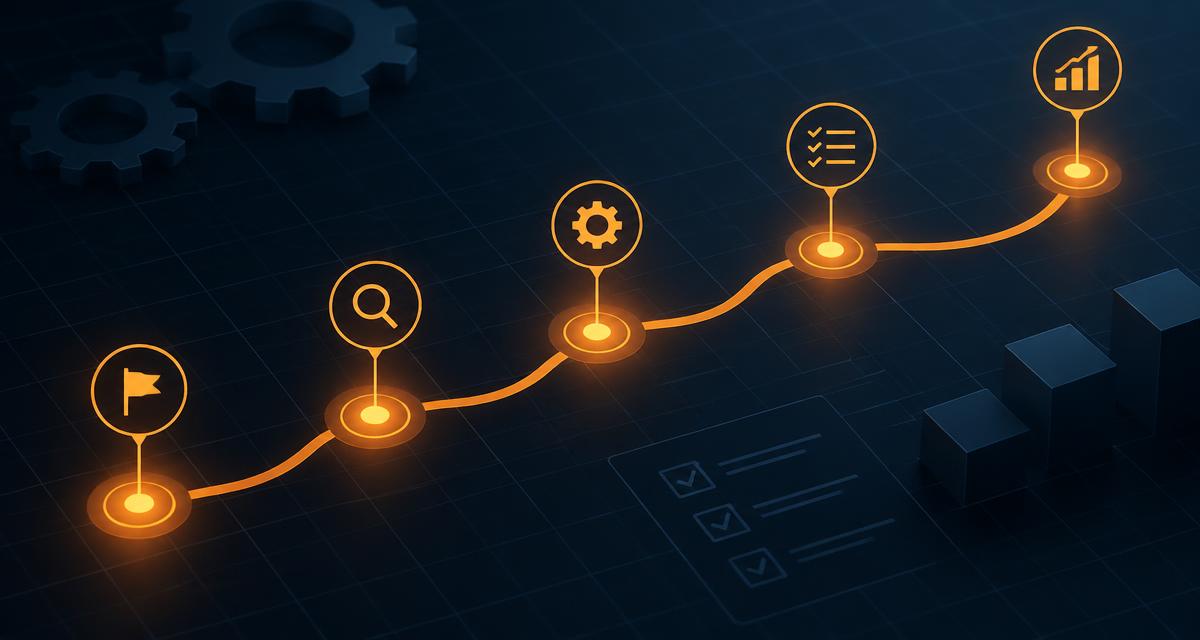
In practice that journey has three stages. First, analyse and prove: assess where AI will pay back soonest and build the case. Then integrate and assist: deploy co-pilots, triage and interaction summaries alongside your people, so trust is earned before anything is automated away. Finally, automate and scale: take the paths that have been validated with real interactions and extend them — conversational chat, voicebots, live translation — with measurement at every step.
Crucially, return on investment is not a one-off calculation made to win budget. It is a discipline you carry through the whole programme: measure what the deployment was supposed to change, prove it changed, and use that evidence to decide what happens next. That is what separates a pilot that quietly stalls from one that changes the working day.
Where Geomant fits
Curious which repetitive activities inside your customer contact operation could be simplified or automated? Geomant brings processes, systems and customer journeys together and works out where technology can genuinely support your people — across Genesys, Microsoft, Cisco and Avaya estates. Contact us for a good conversation at hello@geomant.com.